
The metaverse died, but spatial design didn't (what designers can take away)
Meta just pulled the plug on Horizon Worlds VR. Here's why designers should care, but not panic.

Yesterday, Meta officially announced it’s shutting down Horizon Worlds on Quest headsets. By June 15, the VR version of what was supposed to be the metaverse will be gone.

This is the company that literally changed its name from Facebook to Meta in 2021. Mark Zuckerberg stood on a stage and told us the metaverse would “reach a billion people” and “host hundreds of billions of dollars of digital commerce.” The company poured close to $80 billion into Reality Labs. They laid off over a thousand VR employees just this year alone. And now? The flagship product, the whole reason for the rebrand, is being reduced to a mobile app that nobody asked for.
The metaverse as we were sold it? It’s dead.
But here’s the thing nobody’s talking about: spatial design is more alive than ever. The vision just looks completely different than what Meta tried to force on us.
Meta discovered that people are more active on phones!!
What actually happened
Meta’s metaverse failed for the same reason a lot of design projects fail: they built a solution nobody needed and then spent billions trying to convince people they wanted it.
Horizon Worlds never cracked more than a few hundred thousand monthly users. The avatars looked like Wii characters that had been left in the microwave. The experiences felt hollow. And the fundamental pitch: ” put on this heavy headset and hang out in a cartoon room with strangers” turned out to be something approximately zero people wanted to do after a long day at work.
Meanwhile, Meta’s Reality Labs division lost $19.2 billion in 2025 alone, bringing cumulative losses to roughly $80 billion. For context, that’s more than the entire market cap of some Fortune 500 companies. Burned. On legless avatars.
The VR version goes dark on June 15. Subscriber perks get stripped by March 31. Meta is pivoting hard toward AI and smart glasses, specifically the Ray-Ban Meta glasses and a line of AR glasses they’ve been teasing. The word “metaverse” didn’t even come up in their last earnings call.
So why should designers care?
Because the underlying shift: designing for space, depth, and the physical world around us didn't die with Horizon Worlds. If anything, it's accelerating.
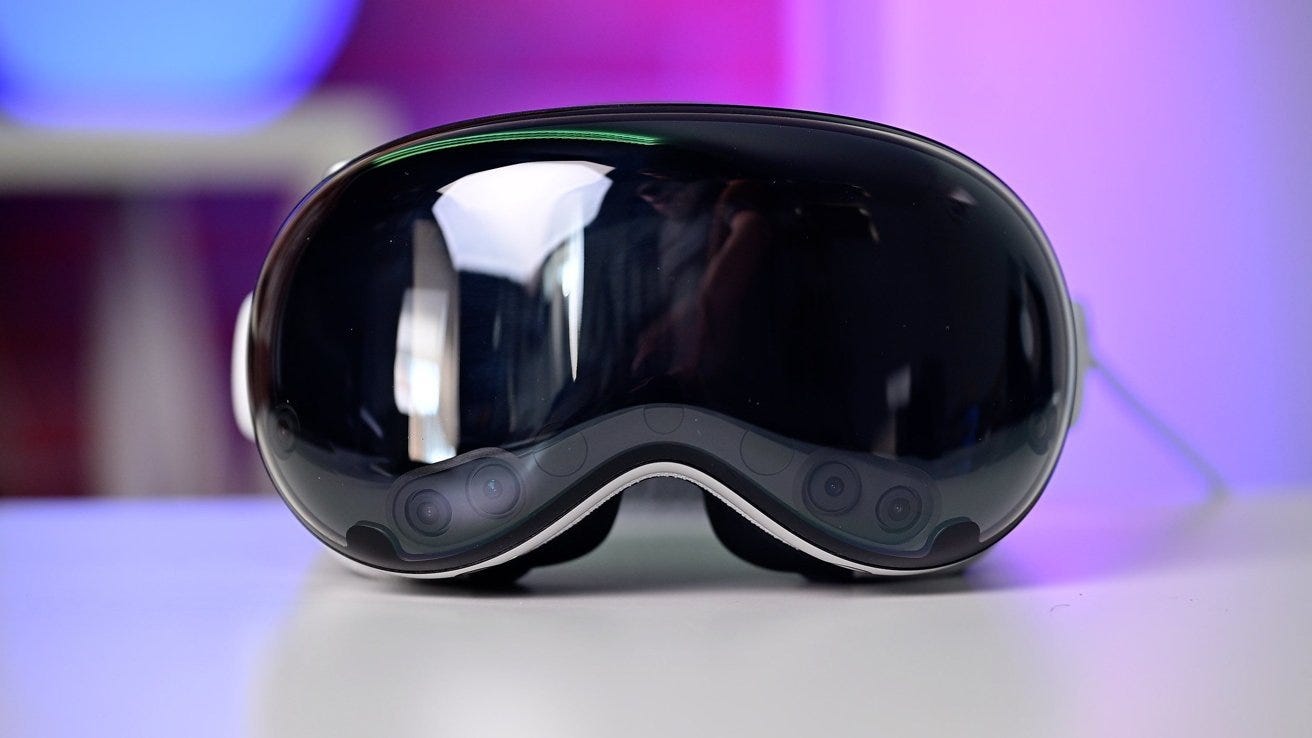
Apple is still investing heavily in spatial computing. The Vision Pro got an M5 chip upgrade, visionOS 26 just dropped with new spatial widgets and improved Personas, and enterprises are building real tools for architecture, healthcare, and training. The spatial computing market is still projected to grow from $20 billion to over $85 billion by 2030. That’s enterprise money flowing into real products.
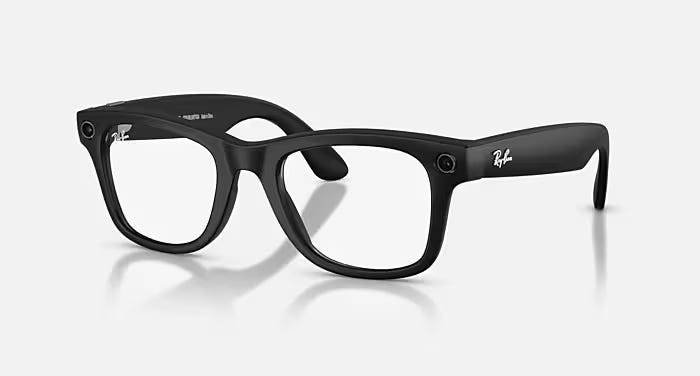
AR glasses are the new frontier. Meta’s own Ray-Ban smart glasses tripled in sales last year. Apple is reportedly pivoting from headsets toward lightweight smart glasses. The future of spatial isn’t a headset you strap on to escape reality. It’s lightweight glasses that layer information on top of reality. That requires a completely different design language.
Spatial thinking is bleeding into everything. Even if you never design for a headset, spatial design principles are showing up in 2D interfaces, responsive environments, retail experiences, and AI-powered personalized spaces.
Takeaways for designers
1. The “metaverse” was a branding problem. Spatial computing is real.
Meta’s mistake wasn’t investing in spatial technology. it was marketing an escapist virtual world when people wanted tools that enhance their actual lives. The design opportunities aren’t in building virtual worlds. They’re in making the real world smarter, more responsive, and more layered with useful information.
When you strip away the hype, spatial computing is just: how do we design experiences that understand and respond to the 3D space around a person? That question matters whether you’re designing for AR glasses, a retail store, a hospital navigation system, or a dashboard that lives in your peripheral vision while you work.
2. Your 2D design skills aren’t obsolete, they’re a foundation.
If you’re a UX designer reading this and thinking “well, guess I need to learn Unity now,” slow down. The core principles of good design: hierarchy, readability, user research, reducing cognitive load are more important in spatial contexts, not less. When interfaces exist in 3D space around a person, bad information architecture doesn’t just confuse users. it literally overwhelms their physical environment.
Designers who understand how to simplify complexity and respect user attention will thrive in spatial design. That’s fundamentally a 2D-trained skill applied to a new dimension.
3. Start thinking in layers, not screens.
The biggest mental shift for designers isn’t “2D to 3D” it’s “screens to layers.” Spatial interfaces don’t live in a rectangle you hold. They exist at different depths, in your peripheral vision, anchored to physical objects, appearing and disappearing based on context.
Start noticing how you interact with space in your daily life. How do you scan a room? Where does your eye go first? What information do you want close vs. far away? These are spatial design questions
4. The real opportunity is at the intersection of AI + space.
Meta didn’t just pivot away from VR. they pivoted toward AI-powered wearables. Apple’s Vision Pro is leaning harder into on-device AI with every update. The future isn’t VR or AI. it’s AI that understands your physical context and surfaces the right information at the right time in the right place.
For designers, this means the most interesting work will happen at the intersection of spatial interfaces and intelligent systems. Think: an AR overlay that recognizes you’re in a client meeting and surfaces relevant notes without you asking. Or a retail experience that adapts its layout based on customer flow patterns. This is where spatial design meets service design meets AI
5. Don’t wait for the “right” hardware.
One thing the metaverse hype cycle taught us is that waiting for the platform to mature before building skills is a losing strategy. The designers who will lead in spatial computing are the ones experimenting now, even if the tools are clunky and the hardware is expensive.
You don’t need a Vision Pro to start thinking spatially. You can prototype spatial concepts in Figma with depth layers. You can explore 3D modeling in Spline or Blender. You can study how apps like Spatial and Miro handle shared virtual canvases. The point isn’t to master visionOS today, it’s to train your brain to think beyond the flat rectangle.
Resources
Online event: Design feedback Fridays, every friday at 11 am pacific time on our Discord
20% off for Mobbin, the world’s largest library of real-world design inspiration! https://mobbin.com/designbuddies
Podcast: How Creators Make Money!
$10 free Replit credits for you to build + new designer mode launched
🐰 About Design Buddies
Design Buddies is a community where you level up your design career. Land jobs, improve your design skills, and make friends. We have resources, events, design challenges, job boards, fun perks, and more.
👋 Visit our website and hop into our Discord community.
💖 Partner with us, or share your resources in our newsletter (email grace@designbuddies.community)
🌟 Watch our past events and connect with us on Instagram, Twitter, and LinkedIn for more fun!
👩🏻💻 Subscribe to Grace Ling’s newsletter, Grace Pace!
Got anything else you’d like to see in our newsletter and community? Please email grace@designbuddies.community
Really good article!